

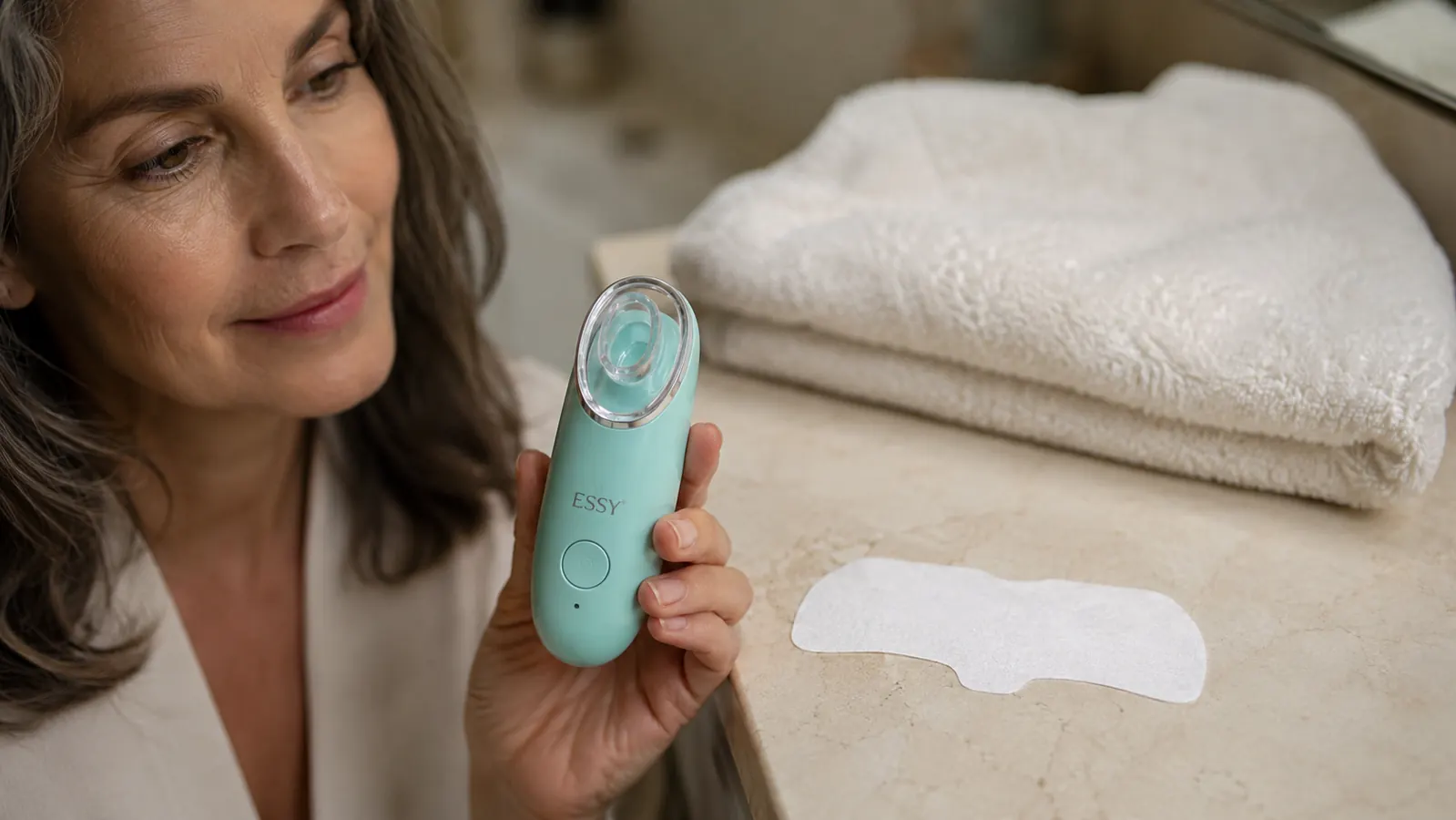
My name is Diane Whitfield. I'm 54, I've worked as a home care provider around Spokane for eleven years, and the same handful of blackheads along my nose and nostril creases have been showing up in every mirror I own since long before I started this job. For years my answer was a box of drugstore adhesive pore strips, the peel-off kind, because they were cheap and easy to find. Then a coworker mentioned an electric pore vacuum called the Essy, and I decided to actually compare the two properly instead of just switching on a whim. Here's the honest, side by side answer after six weeks of testing both on the same stubborn nose.
The short version. If you want a deeper clean, results that hold past a few hours, and a tool you'll still be using six months from now instead of tossing in a drawer, the Essy pore vacuum wins. If you want something with zero learning curve, no charging, no risk of bruising, and you only need it occasionally before a big event, pore strips still have a real place. Below is exactly how the two stacked up, tracked with the same weekly photo and the same close look in the same magnifying mirror so I wasn't just going on a gut feeling.
How I Tested Both, Side by Side
I split six weeks into two even blocks instead of guessing. Weeks one through three, adhesive pore strips only, using a well known drugstore brand like Bioré, applied twice a week on damp skin exactly as the package instructed, left on the recommended ten to fifteen minutes, then peeled off from the outer edges in. Weeks four through six, the Essy pore vacuum only, once a week after steaming, using the smaller oval head on level two, the same routine I'd already settled into during my longer-term test of the device.
Same bathroom, same overhead light, same magnifying mirror, same time of evening, and a phone photo of my nose taken every Sunday at the kitchen table where the light is more even than our bathroom's yellowish bulb. I'm not running a lab study here, just a fair, controlled look at two tools on one 54-year-old nose that's been dealing with the same trouble spots for decades, which felt like a more useful comparison than reading two different strangers' reviews of each product separately.
What My Pore Strip Weeks Actually Looked Like
The strips were simple, I'll give them that. Wet my nose, press the strip on smooth side down, wait until it turned rigid and slightly crackly, then peel. The satisfaction of seeing what came off on the strip itself is real, and the first time I used one in years I actually held it up to the light like I was twenty-five again, amazed at the little dark specks stuck to the adhesive. That satisfaction faded fast, though, because most of what came off was surface debris sitting right at the pore opening, not the deeper blackheads packed into my nostril creases.
By the second week, my skin around my nose was noticeably pink and a little tender right after peeling, more than I remembered from using strips in my thirties. I chalked that up to skin that's simply thinner now than it used to be. The blackheads in the creases closest to my nostrils, the ones I actually care about most, barely budged across the full three weeks. A few surface spots reappeared within a day or two of each strip, which matched what I'd read about strips pulling debris from the very top of the pore rather than clearing it deeper down.
What My Essy Pore Vacuum Weeks Actually Looked Like
Switching to the Essy felt slower at first, honestly, because there's a steaming step and a bit of prep the strips never asked for. I'd run a small facial steamer for about five minutes, cleanse, pat dry, then work the oval head over my nose and nostril creases slowly on level two, never lingering more than a couple of seconds in one spot. The whole routine, steam included, ran about fifteen minutes, longer than the ten minutes a strip sits on your face, but it only happened once a week instead of twice.
What surprised me was how much deeper into the crease the suction seemed to reach compared to the flat adhesive of a strip. By the second week of this phase, the nostril crease blackheads that had ignored three weeks of pore strips were visibly smaller. There was no pink irritation the next morning the way strips had left, as long as I stayed on level two and kept the device moving. The one exception was a single overly ambitious session where I held the suction still too long and left a small bruise, which I'll get into honestly further down, because it's a real risk this tool carries that strips simply don't.
| Essy Pore Vacuum | Adhesive Pore Strips | |
|---|---|---|
| How it works | Electric suction pulls debris out of the pore, with 5 adjustable intensity levels and interchangeable heads | Adhesive layer bonds to surface oil and debris, then physically pulls it off when peeled |
| Reusable vs single-use | Reusable device, rinse the head after each session and it's ready again | Single-use, one strip per treatment, then thrown away |
| Cost over time | One upfront device cost, no ongoing purchases beyond electricity to charge it | Ongoing cost, a fresh box needed every few weeks with regular use |
| Depth of clean | Reaches into nostril creases and pulls from below the surface when paired with steaming | Mostly lifts surface-level oil and debris sitting right at the pore opening |
| Adjustable strength | 5 suction levels, can be dialed down for sensitive or thinner mature skin | Fixed strength, same adhesive pull every time regardless of skin sensitivity |
| Skin irritation risk | Low on level two with steaming first, bruising possible if held still on high suction | Redness and tenderness common right after peeling, especially on thinner skin |
| Time per session | About 15 minutes including steaming, once a week | About 10 to 15 minutes wear time, typically twice a week |
| Best for | Ongoing, deeper blackhead maintenance and someone who wants a reusable tool | Occasional surface refresh before an event, no charging or upkeep required |
Where the Essy Pore Vacuum Wins
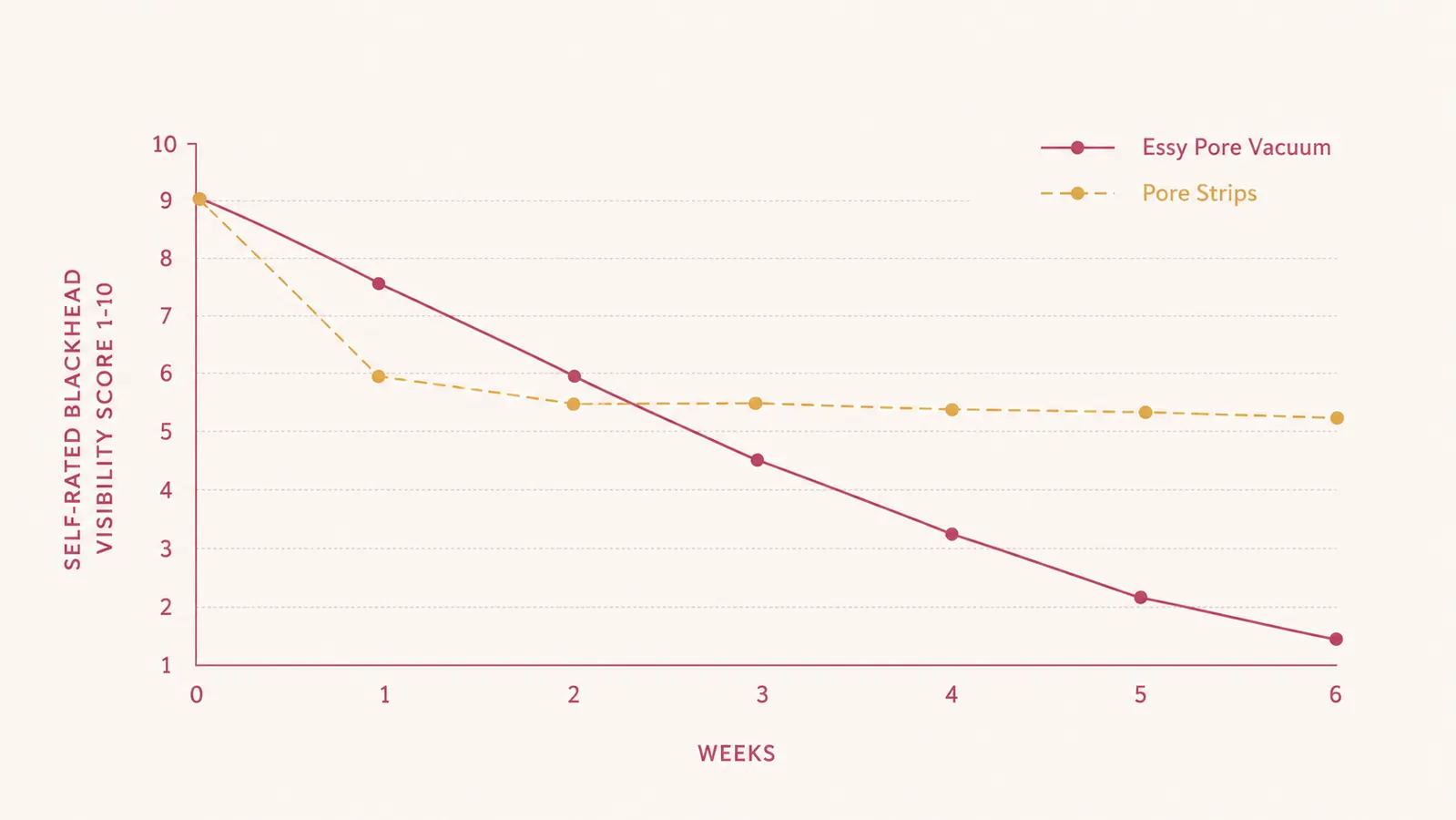
The clearest difference showed up right in my magnifying mirror. After three weeks of pore strips, the crease along the side of my left nostril, my worst spot by a wide margin, looked essentially the same as week zero. After two weeks of the Essy, that same crease was visibly clearer, with fewer and smaller blackheads sitting in a spot strips had never touched. The steaming step matters more than I expected going in. Warm, open pores let the suction reach debris that a flat adhesive strip simply can't get to, since a strip can only pull on whatever's sitting right at the surface, not what's packed down inside the pore.
The other real advantage is that it's a tool I still own rather than a box I keep buying. Six months into using the Essy regularly, I've spent nothing beyond the original purchase and the occasional charge from a USB cable. With strips, I was restocking every few weeks during any period I used them consistently, and that adds up in a way that's easy to lose track of when you're only buying a small box at a time at the drugstore counter.
Where Pore Strips Win
There's no getting around how simple strips are. No charging, no learning curve, no risk of bruising yourself the way I did on the Essy's higher settings during my very first month with it. You wet your face, press the strip on, wait, and peel. For someone who wants a quick surface refresh the night before a family photo or a big event, that simplicity has real value, and I'm not going to pretend otherwise just because the vacuum won overall for me.
Strips also travel well without needing a charger or an outlet, which matters if you're the kind of person who packs light for a weekend trip. And because they're single-use and disposable, there's no maintenance step, no rinsing a suction head under warm water afterward, no risk of leftover residue sitting in a collection chamber if you forget to clean it. For someone who only wants an occasional touch-up rather than an ongoing routine, that low-commitment simplicity is a legitimate reason to stick with strips.
Three Weeks of Strips Barely Touched My Worst Spot
Two weeks of steaming and using the Essy on level two reached the nostril crease that pore strips had ignored for years. If you want to check current availability and pricing before committing to a routine, here's where I look.
Amazon Check Today's Price on Amazon →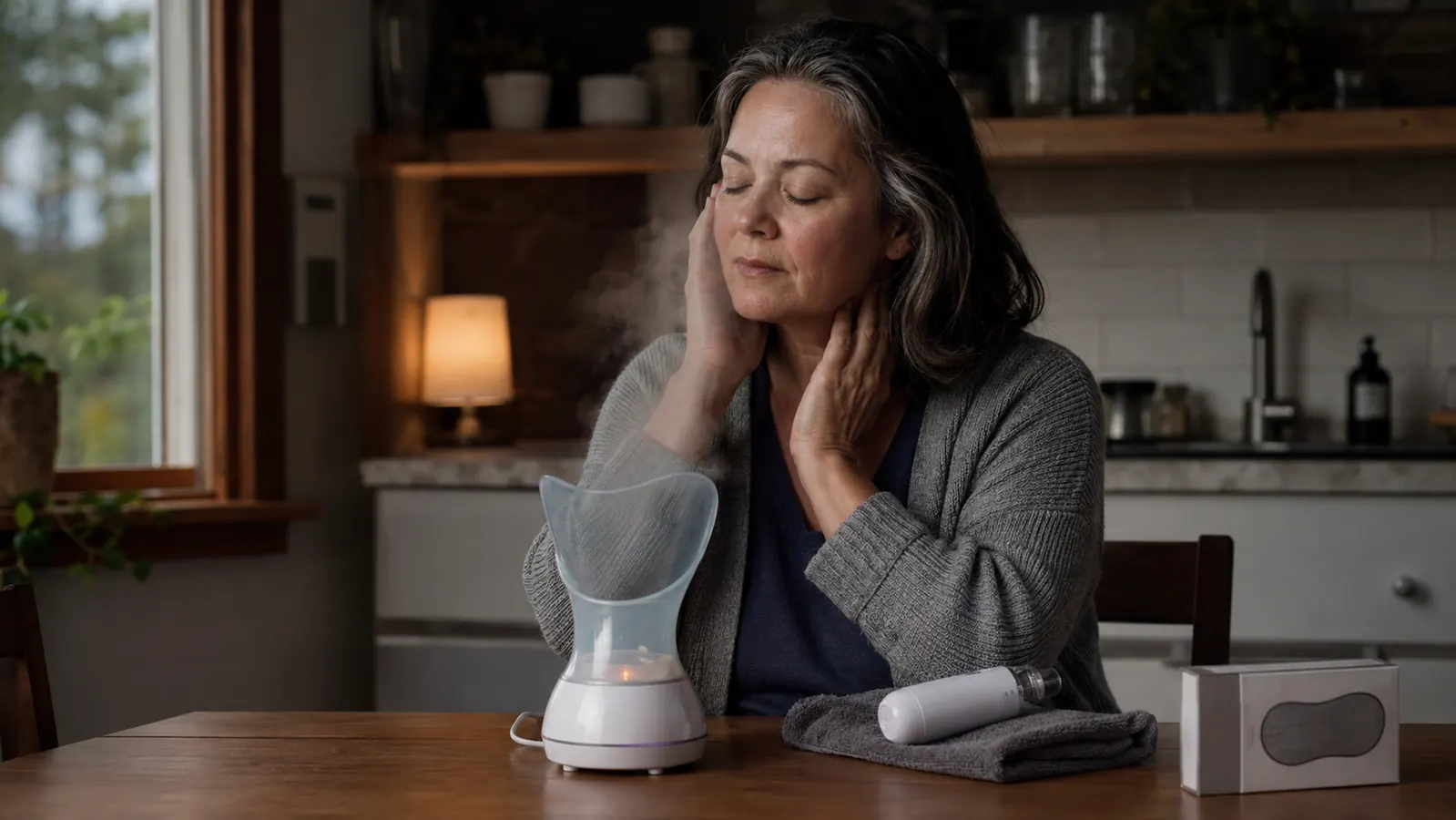
Cost Over Time, the Part Nobody Adds Up
When I was buying strips regularly a few years back, I never sat down and actually totaled what a year of twice-weekly boxes cost me, because each individual box felt cheap enough not to think about. Once I started tracking it during this comparison, restocking every three to four weeks added up to more over twelve months than the one-time cost of the Essy, and that's before factoring in the drugstore trips themselves, which never happened on their own during a busy week of client visits.
The vacuum's only ongoing cost is replacing the suction heads occasionally, which I haven't needed to do yet after six months of once-a-week use. For someone in my position, stretching a home care provider's paycheck and trying to be sensible about small recurring purchases, that difference matters more than it might for someone who only reaches for a strip once or twice a year before a special occasion.
Three weeks of pore strips left my worst nostril crease exactly where it started. Two weeks with the vacuum, steamed first and used gently, reached the spot the strips never could.
Who Should Buy Which
If you only deal with mild surface shine and the occasional visible blackhead you want gone before a photo or a night out, and you'd rather not manage charging a device or learning a suction routine, pore strips are still a reasonable, low-commitment choice. They're also worth keeping around as a backup for weeks when you simply don't have fifteen minutes to spare for the steaming and suction routine, since something is often better than nothing on a rushed morning.
But if your blackheads sit deeper in the crease the way mine do, the kind that a flat adhesive strip never quite reaches no matter how long you leave it on, the Essy pore vacuum produced faster, deeper, more lasting results in this comparison, and it's the one I've kept reaching for every Sunday since the six-week test ended. For anyone over 45 whose skin has thinned enough that strips leave more redness than they used to, the adjustable suction levels also give you a gentler option strips simply can't offer.
See the Tool That Reached What Strips Never Could
One reusable device, adjustable suction, and a routine that actually held up past six months for me. If you want to check current pricing and availability, here's where I look.
Amazon Check Today's Price on Amazon →