

I'm Diane Whitfield. I'm 54, and I've spent eleven years working as a home care provider around Spokane, Washington. For most of that time I woke up every morning with a crease running from the corner of my mouth halfway to my ear. It used to fade by the time I'd finished my coffee. By my late forties, it was still faintly visible at lunch, and some mornings it hadn't fully let go by dinner.
I tried the obvious fixes first. Sleeping on my back lasted about three nights before I woke up on my side again out of habit. A cheap satin pillowcase from the drugstore felt more like it was marketed for hair than skin, and it slid off the pillow by 2 a.m. every time. It was a coworker who finally talked me into the Ravmix 100% Silk Pillowcase, the 21 momme mulberry silk one with the zipper closure, after she showed me hers on a shift break. It didn't erase my crease overnight. Nothing does. But it changed how I think about the eight hours my face spends pressed into fabric every night, and using it correctly made a bigger difference than just buying it and hoping.
What finally convinced me to take it seriously wasn't vanity, if I'm honest. It was a client's daughter, maybe thirty years old, who mentioned offhand that she could tell which side I slept on just by looking at my face during our morning visits. That stuck with me longer than I expected. So I stopped treating the pillowcase as a nice-to-have gift-shop item and started treating it like part of a routine, the same way I'd never skip a client's morning medication just because I was running late.
Stop fighting your pillow every night. Start with the fabric that doesn't fight back.
The Ravmix 100% Silk Pillowcase is the exact one I use, 21 momme mulberry silk with a hidden zipper closure so it stays put through a full night of side-sleeping.
Amazon Check Today's Price on Amazon →Step 1: Get the Fit Right Before You Judge the Fabric
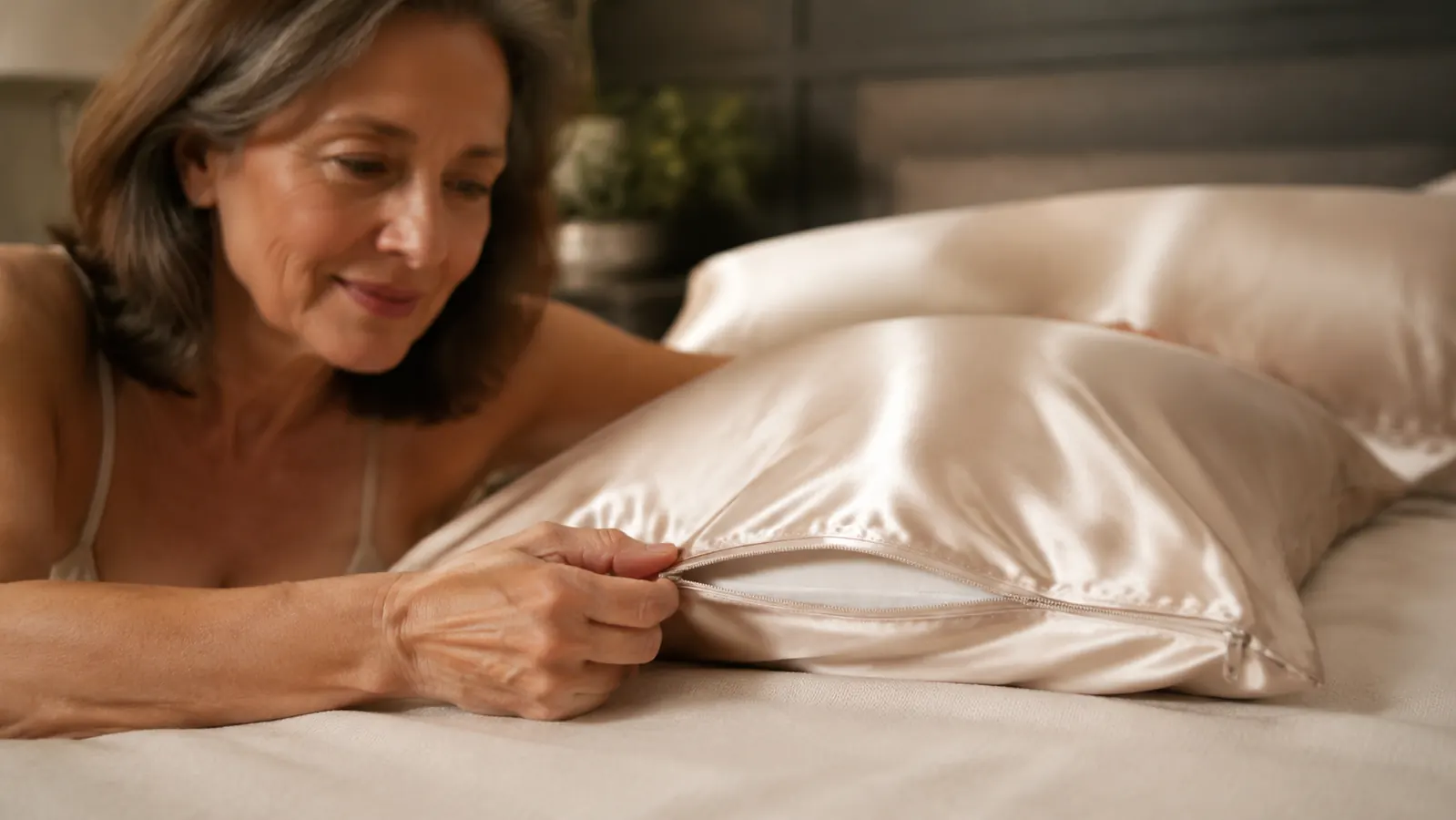
Most of the disappointment I hear about silk pillowcases traces back to one thing: people buy the wrong size or a version without a proper closure, and it bunches up under their cheek by 3 a.m., which defeats the entire point. My Ravmix pillowcase comes in a standard queen size with a zipper closure rather than the envelope-style opening some cheaper brands use. The zipper matters more than it sounds like it should. An envelope closure gapes open as you toss around, and the pillow inside works its way half out by morning, cotton corner and all, pressed right against your face.
Before your first night, measure your actual pillow rather than guessing from the box it came in. I learned this the hard way with a first pillowcase that was technically a standard size but ran snug on my slightly oversized pillow, which meant it stretched tight across the surface instead of draping loosely. Loose drape is what lets the silk slide under your skin instead of gripping it. If the case fits snug and taut like a fitted sheet, that's actually working against the anti-crease effect you bought it for.
Check the momme count too, though don't obsess over it. Mine is 21 momme, which sits in the sweet spot most dermatology-adjacent guides point to, heavy enough to feel substantial and drape well, not so heavy that it loses the slip that makes it different from cotton. Anything much under 19 momme starts to feel thin and less durable through repeated washes.
Step 2: Adjust Your Sleep Position, Even a Little
I am a committed side sleeper. Twenty years of overnight shifts and early wake-ups trained my body to fall asleep on my right side, and no amount of wishful thinking about back-sleeping has ever stuck for more than a few nights. So I stopped fighting it and instead worked on reducing how hard my face pressed into the fabric while staying on my side, which is a much easier habit to actually keep.
The biggest change was switching to a slightly firmer, higher pillow that keeps my head propped rather than sinking my cheek flat into the surface. A softer pillow lets your face fold into it, and folded skin against any fabric, silk included, still creates a crease line, just a fainter one than cotton would. A firmer pillow keeps more of your cheek's weight distributed across the surface instead of concentrated in one folded crease point.
I also started alternating which side I fall asleep on, left one week, right the next, using a small habit trick where I'd tuck a spare pillow against my back on the side I wanted to avoid. It's not foolproof. I still wake up on my old favorite side plenty of nights. But alternating meant my crease lines stopped concentrating in the exact same spot every single night, which over a few months noticeably softened how deep that one line on my right cheek had become.
Step 3: Let Your Nighttime Skincare Absorb Before Your Head Hits the Pillow
This one surprised me. I used to apply my night cream and climb straight into bed, and I noticed my Ravmix pillowcase would develop a faint sheen on the pillow surface after a few nights, plus my face didn't glide across the fabric quite as smoothly as it should have. Silk works partly because it lets your skin slide rather than drag when you shift positions, and a heavy, not-yet-absorbed layer of cream sits between your skin and the fabric, reducing that slide.
Now I give my night cream about ten minutes to sink in before I actually lie down, usually while I'm doing the last few things around the house, brushing my teeth, setting out tomorrow's scrubs for a shift. It sounds like a small detail, but it's the difference between the silk doing its job and the silk just sitting under a layer of product doing nothing.
It also protects the pillowcase itself. Product buildup on silk fibers over time makes them feel less slick and shortens how long the pillowcase looks good between washes, which matters if you're trying to get real mileage out of one purchase instead of replacing it every few months. I keep a lighter hand with my night cream near my hairline and jaw for exactly this reason, and save the heavier layer for my cheeks and forehead where it has more time to work before I actually lie down.
Step 4: Wash It the Way Silk Actually Wants to Be Washed
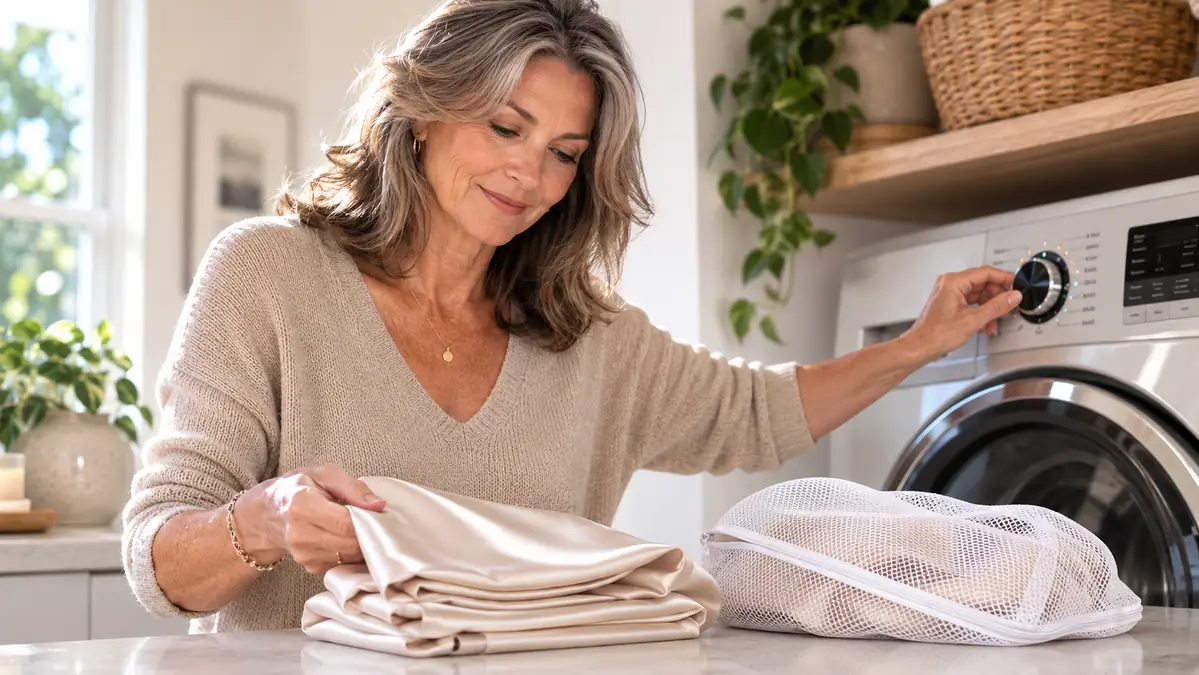
I ruined a cheaper silk pillowcase two years before I bought my Ravmix one by tossing it in with a regular warm-water load. It came out dull, slightly stiff, and with a snag where a zipper on another item had caught it. Lesson learned. Now I wash my Ravmix pillowcase separately, or in a mesh laundry bag with other delicates, on the cold, gentle cycle, using a small amount of mild detergent without bleach or fabric softener. Fabric softener in particular coats silk fibers and actually reduces the slip you're trying to preserve.
I skip the dryer entirely and lay it flat on a towel to air dry, usually overnight on my bathroom counter. It's ready by the next evening. I wash it about once a week, which lines up with how often I'd wash a regular pillowcase anyway, so it hasn't added real work to my routine, just a slightly different setting on the machine.
I also bought a second Ravmix pillowcase about a month in, once I was sure I'd actually keep this up. Having two means there's always a clean one ready on wash day instead of me deciding to skip a night on silk because the only one I own is damp on the towel rack. That one purchase decision did more for consistency than any reminder or habit tracker ever could.
Step 5: Give It Real Time and Track What You're Actually Seeing
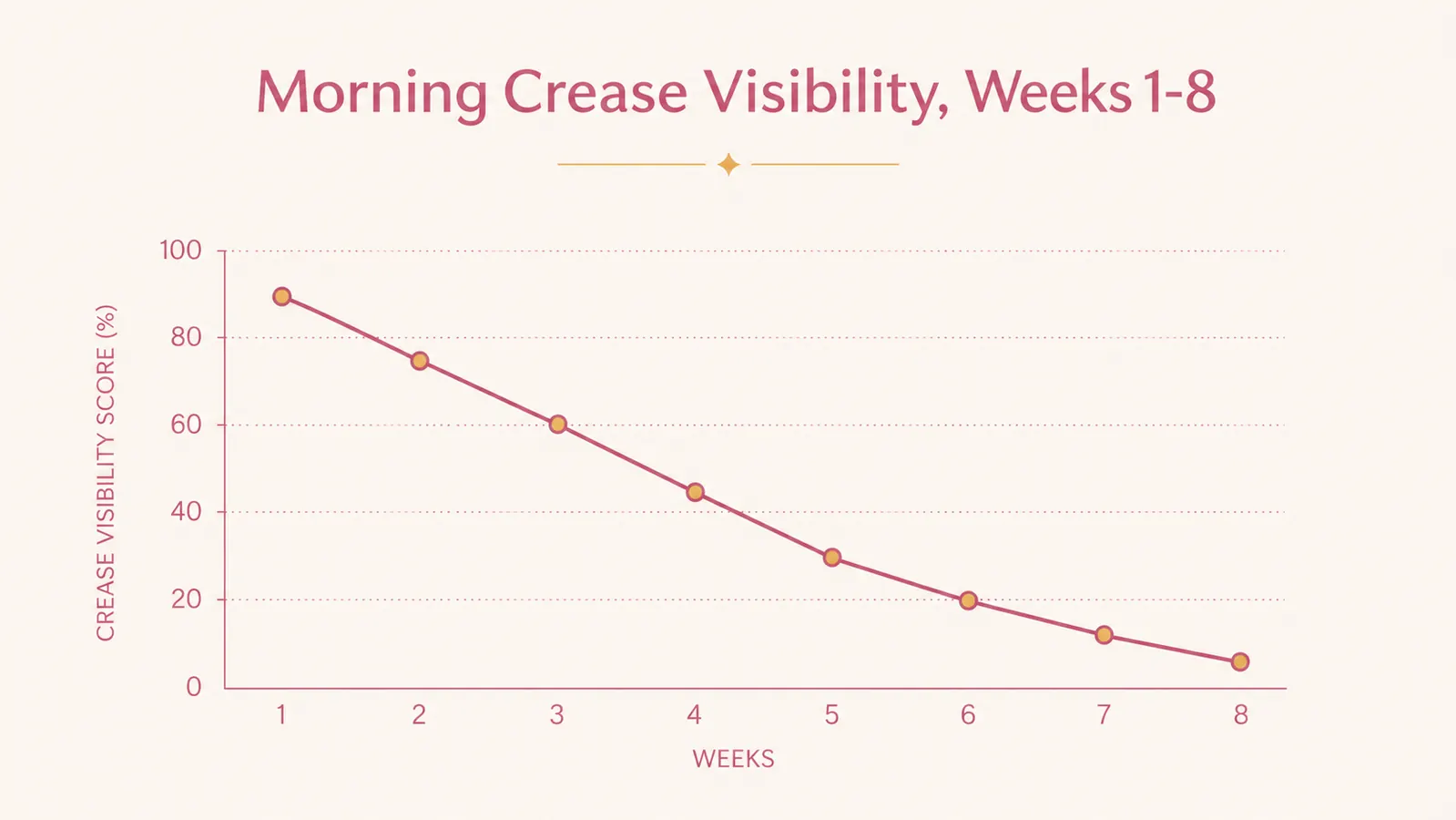
The first two weeks, I didn't see much. My skin still had a faint crease most mornings, just a little less stubborn about fading. It was closer to week five or six, sleeping on it consistently, that I started noticing my crease line was fading within the first hour of being up rather than lingering through my morning routine and into my first home visit of the day.
I started taking a quick phone photo most mornings, nothing scientific, just holding my phone up in the bathroom mirror before I put on makeup. Looking back at photos from month one versus month four made the difference obvious in a way that day-to-day memory never would have. If you're trying this yourself, do the same. Sleep creases fade slowly enough that you'll convince yourself nothing changed unless you have something to actually compare against.
Give it a realistic runway before you decide whether it's working. I'd tell anyone starting this to commit to at least six weeks of nightly use, not the occasional night when you remember, before drawing any conclusions. A pillowcase you use three nights a week and forget about the rest won't tell you anything useful about what silk actually does. Consistency is doing more of the work here than the fabric itself.
What Else Helps
The pillowcase does a lot of the work, but it's not the whole picture. Keeping a humidifier running in my bedroom through Spokane's dry winter months has made a noticeable difference in how my skin looks overall, silk pillowcase or not, since dehydrated skin creases more easily and holds those lines longer. I also switched to a silk-covered hair tie years ago after noticing my regular elastic ones were tugging at strands right near my hairline while I slept, which is a small thing but adds up the same way pillowcase fabric does. And plain water intake matters more than any product I've bought. On weeks I'm not drinking enough, my morning crease looks deeper no matter how well I slept on silk.
I've also gotten more careful about the pillow itself, not just the case on it. A pillow that's gone flat and thin doesn't support my head the way it should, so I've replaced mine roughly every eighteen months instead of running one into the ground for years the way I used to. A silk pillowcase on top of a worn-out, lumpy pillow still lets your face settle into uneven folds, just with less friction while it happens.
I didn't wake up one morning and see a different face. I woke up one morning, months in, and realized I'd stopped checking for the crease at all.
Your pillowcase works against you every single night. This one doesn't.
If you're ready to stop fighting a cheap satin case that slides off by 2 a.m., the Ravmix 100% Silk Pillowcase with zipper closure is the one I've been sleeping on for six months, at 21 momme mulberry silk.
Amazon Check Today's Price on Amazon →