

I'm Diane Whitfield, 54, and I've spent the last eleven years working as a home care provider here in the Spokane Valley. That job puts me close to a lot of faces. I help clients get dressed, adjust pillows, lean in to catch a soft voice, and spend a lot of time at close range with people twenty and thirty years older than me. Somewhere around 51, menopause hit and I started noticing my own jawline doing the thing I'd watched happen to clients for a decade. The line that used to run sharp from my chin to my ear had started to blur into my neck. I'd catch my reflection in a client's hallway mirror, the harsh overhead kind nobody looks good under, and think, when did that happen.
Before I bought the FOREO Bear microcurrent device, I tried the easy stuff first. More water, which did nothing for my jawline specifically no matter what anyone on the internet claims. Sleeping on my back, which lasted about four nights before I rolled right back onto my side out of habit. A jade roller from Fred Meyer that felt nice against warm skin and did nothing measurable over six weeks of daily use. What actually moved the needle was a FOREO Bear microcurrent device, used consistently, with a technique I had to learn the hard way over about four months of trial and error, false starts, and a fair amount of skepticism from my own reflection. This is that technique, laid out step by step, the way I wish someone had handed it to me instead of me piecing it together from three different YouTube videos at eleven at night after a long shift.
The Device I Actually Use Every Night
This whole guide is built around one tool: a FOREO Bear microcurrent device. If you want to follow along step for step, this is the one I've used for the last several months. Check today's price on Amazon before you start, since it does move around.
Amazon Check Today's Price on Amazon →Step 1: Prep Your Skin and Set Realistic Expectations
Before the device ever touches your face, wash off makeup and sunscreen and pat your skin dry. Microcurrent devices like the FOREO Bear rely on a conductive gel to actually transmit the current into the muscle underneath the skin. Skip the gel or substitute a regular moisturizer instead, and you'll just drag the device across dry skin with almost no effect, which is exactly what happened to me the first two nights before I read the instructions properly. I use the ultra-conductive primer FOREO sells specifically for this device, applied in a thin, even layer over my jaw, cheeks, and neck before every single session.
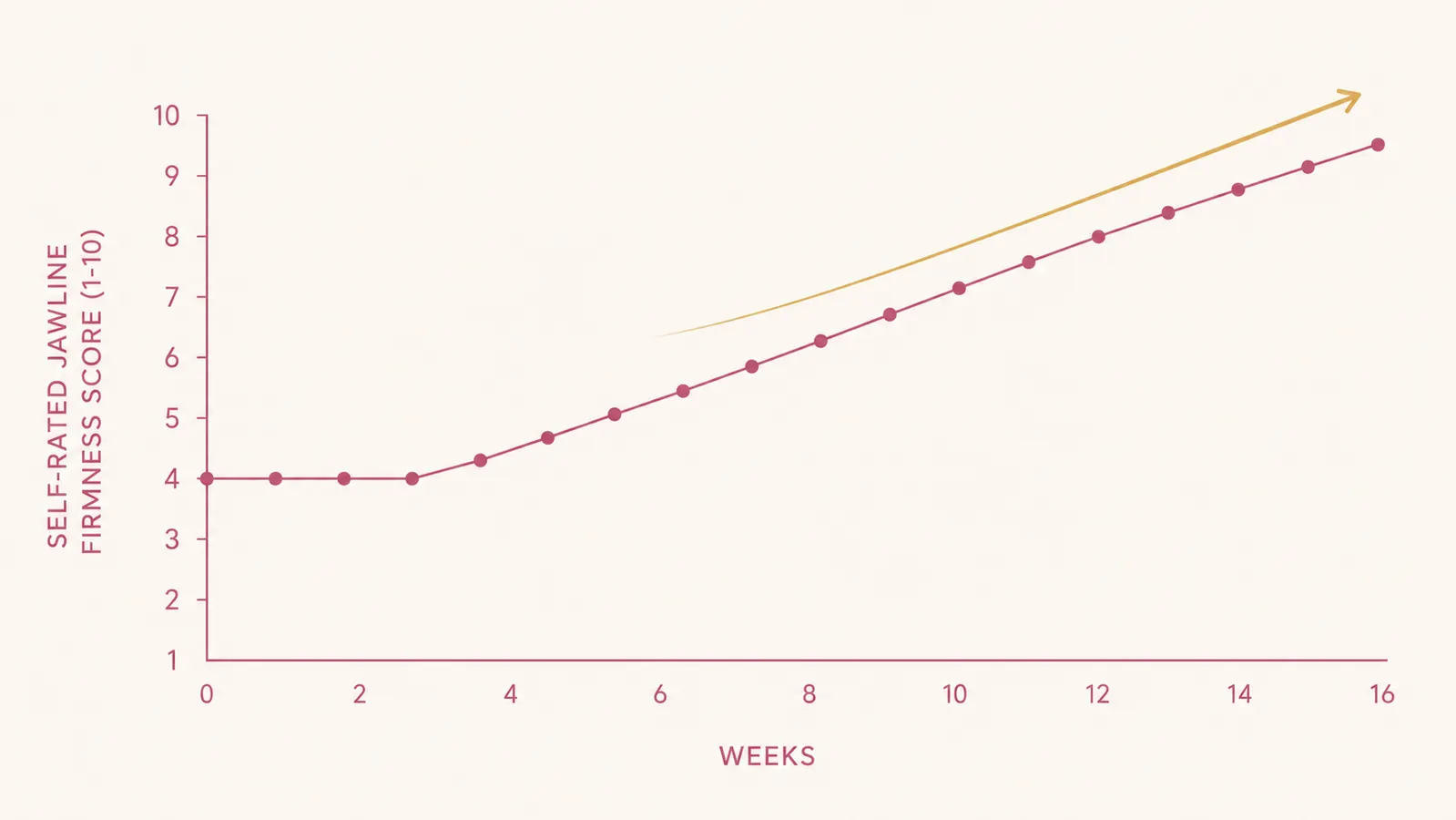
Set your expectations before you start, because this is where most people quit too early, myself included, briefly, around week two. I didn't see anything in the mirror for the first two weeks. Nothing at three weeks either, honestly, and I nearly gave up and put the device in a drawer. Take a plain, unfiltered photo on day one, same lighting, same angle, chin level, before you touch the device at all. You will not trust your memory of what your jawline looked like in March once it's July and things have shifted so gradually that no single day felt like the day it changed.
If you've never used a microcurrent device before, do a short patch test on your inner arm first at the lowest intensity, just to see how your skin reacts to both the gel and the current itself. And if you have a pacemaker, any other implanted electronic device, metal plates from prior surgery, or you're pregnant, skip microcurrent altogether and talk to your doctor about other options. That's not me being overly cautious for the sake of a disclaimer, that's directly on the product label, and I take it seriously given my line of work around medical equipment every day.
Step 2: Learn the Correct Hand Placement and Direction
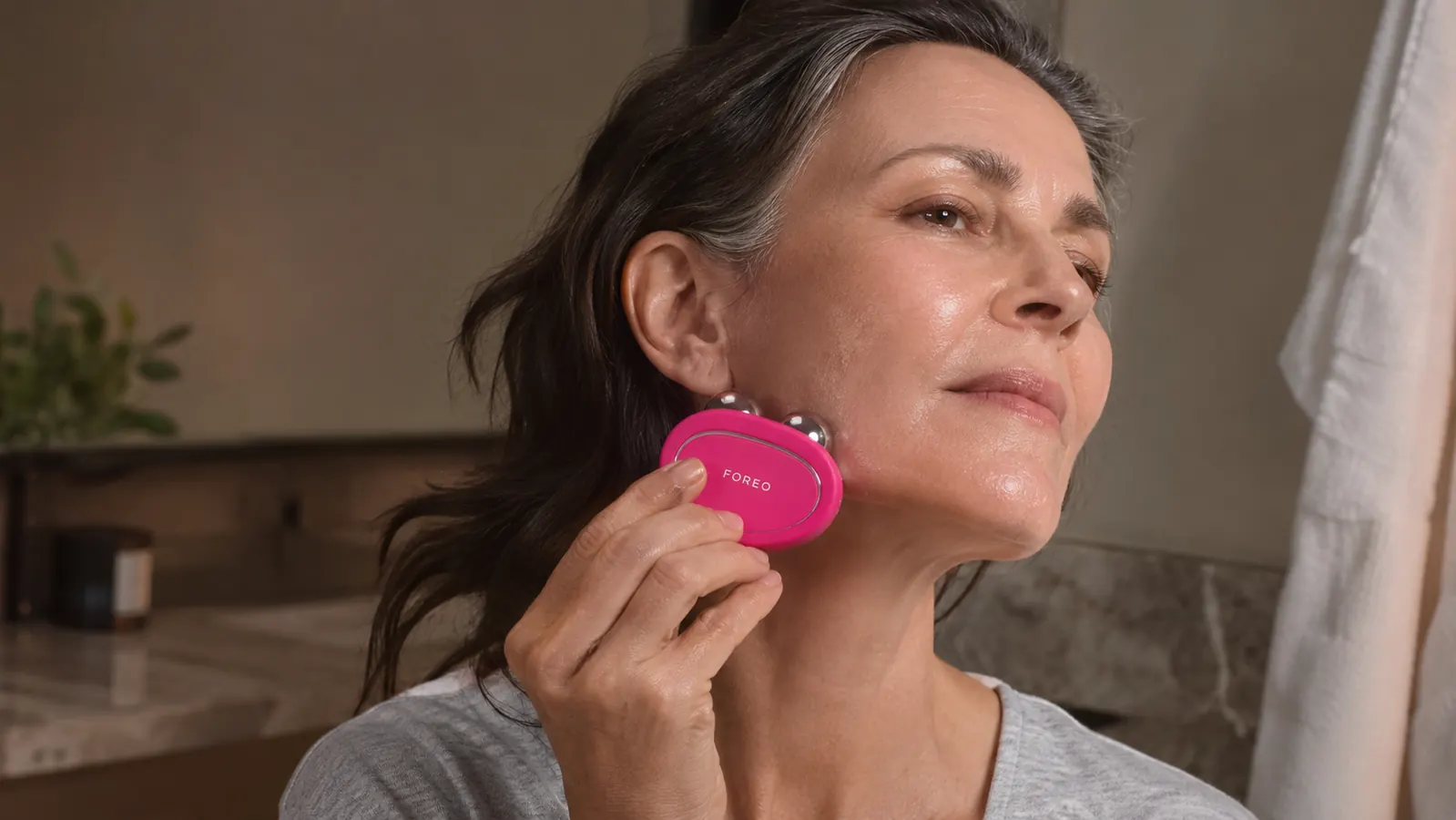
Direction matters more than almost anything else in this whole routine. You're always working against gravity, which means upward and outward strokes, never downward, never side to side across the jaw. I start at the point of my chin and sweep the device up along the jawbone toward my ear, then continue the motion up along my cheek toward my temple. One pass takes about two seconds, unhurried but not lingering. I do each side of my face separately, working from the center of my chin outward toward each ear, rather than trying to cover both sides at once.
The FOREO Bear has two modes I rotate between, a smooth glide mode and a tapping mode that feels like gentle rhythmic pulses instead of a continuous current. For the jawline specifically, I found the glide mode did more for me, probably because it lets me control the upward direction more precisely than the tapping mode, which I mostly reserve for my cheeks and the puffy area just under my eyes where a continuous glide feels too intense first thing in the morning.
My biggest early mistake was moving too fast and holding the device in one spot too long whenever I hit a tender point, usually right under my ear where the jaw meets the neck. Slow, steady, continuous movement works better than lingering in one place hoping for a stronger effect. If a spot feels uncomfortable or oddly sensitive, glide past it rather than parking there, and drop the intensity a notch instead of pushing through the discomfort.
Step 3: Set the Right Intensity and Session Length
The FOREO Bear has ten intensity levels, and I started at level two for my first two weeks, which felt like almost nothing, just a faint prickling sensation along my jaw. That's intentional. Your skin and the muscles underneath need time to adjust to the sensation before you push into stronger settings, and rushing this stage is how people end up quitting from discomfort rather than boredom. By week three I was comfortable at level five, and I've settled into level six or seven most nights now, which is roughly the midpoint of what the device offers.
A full session for me runs about ten minutes total, roughly five minutes per side, covering jawline, cheek, and the small area along my neck just below the jaw where I first noticed sagging. I don't rush it and I don't extend it past that window even on nights I feel motivated to do more. Ten minutes fits into a normal bedtime routine without becoming its own chore, which matters a lot when you're also trying to actually keep doing this consistently six months from now, not just this week while it's new and interesting.
You should feel a mild tingling or twitching sensation, almost like a very light static shock spread thin across the skin, sometimes making the underlying muscle twitch slightly. If you feel a sharp pinch, or your face starts to feel sore or fatigued rather than just gently worked, that's your signal to drop the intensity down a level or two the next session. More isn't better here, and I learned that the slow way after one overzealous night at level nine left my jaw feeling tender the next morning for no real benefit.

Step 4: Build a Consistent Weekly Schedule
I landed on five nights a week after experimenting with daily use for the first month, which honestly just burned me out and made the routine feel like a job on top of my actual job. Five nights, roughly Sunday through Thursday, with weekends off for family time and errands, has been sustainable for going on eight months now. Two rest days a week seems to be enough for the muscle response without the routine collapsing under its own weight the way my back-sleeping experiment did within days.
I do my session right after my evening shower, before I put on night cream, while my skin is still slightly damp and the gel spreads easily without pilling. Working home care shifts that sometimes run late into the evening, I needed something that didn't require a specific time of day, just an anchor point in my existing routine that wouldn't get skipped when a client needed extra help getting settled. Attaching it to something I already do every night, showering, is what made it stick when nothing else I'd tried before had.
The lesson I keep coming back to is that consistency beat intensity for me, every single time, without exception. The weeks I skipped three or four nights because of a hard week at work, I noticed less definition by the following week without fail. The stretches where I hit my five nights consistently are the stretches where the monthly photos actually show a visible difference side by side. This is a cumulative effect built session by session, not a one-time treatment you do and forget about.
Step 5: Track Progress and Adjust as You Go
I take a photo on the first of every month, same bathroom, same overhead light, same angle, chin slightly lifted, no filter and no flattering side angle. I keep a short note in my phone too, just a line or two about how my skin feels and whether I've noticed anything new in the mirror that week. It sounds tedious but it takes ninety seconds and it's the only reason I trust that anything actually changed, instead of just hoping it did the way I'd hoped the jade roller was doing something.
My honest timeline was close to nothing through week three, a subtle firmness I could feel more than see by week six, and by month four my jawline had a visible edge again that hadn't been there since my late forties. A client's adult daughter, who I only see once every few weeks when she visits, asked if I'd lost weight in my face. I hadn't, not a single pound, my scale said the exact same number it had said in January. That was the moment I actually believed the routine was doing something real and not just something I wanted to see.
Once results plateau, and they will plateau, you can drop to three or four nights a week for maintenance rather than pushing the intensity higher chasing more. I've been in maintenance mode for the last two months at four nights a week, and the definition has held steady without any further slippage. If you stop completely for a few weeks, expect some of it to soften back gradually, which is the honest tradeoff of any at-home tool like this rather than a permanent surgical result.
What Else Helps
Microcurrent did the heaviest lifting for me, but a few other habits made the results hold up better over time. I switched to a silk pillowcase a while back, mostly to cut down on the crease lines I was waking up with on the side I sleep on, and I'm careful about sunscreen on my neck and jaw now, an area I used to skip entirely while covering my forehead and cheeks. I also started paying attention to my posture during long shifts, since I noticed hunching forward over a client's bed all day seemed to make the sagging look worse by evening. None of these replace the device, but they're low effort additions that support the same goal instead of working against it.
The weeks I skipped, my jawline noticed before I did.
Start Your Own Four-Month Timeline
If you're ready to try the exact routine above, the FOREO Bear is the device I've used every step of the way. Check today's price on Amazon and give it the same five-nights-a-week commitment before you judge the results.
Amazon Check Today's Price on Amazon →